

Global LED Display Market Continues to Expand as Overseas Demand Grows Steadily
The global LED display market continues to expand as digital transformation accelerates and smart city initiatives reshape industries worldwide. Growing demand for high-performance visual communication is driving the adoption of LED display solutions across commercial, educational, transportation, entertainment, and public infrastructure sectors.
As businesses and institutions seek more effective ways to deliver information and engage audiences, LED display technology has become an important part of modern digital infrastructure. Its high brightness, seamless scalability, energy efficiency, and long-term operational reliability make it suitable for a wide range of indoor and outdoor applications.
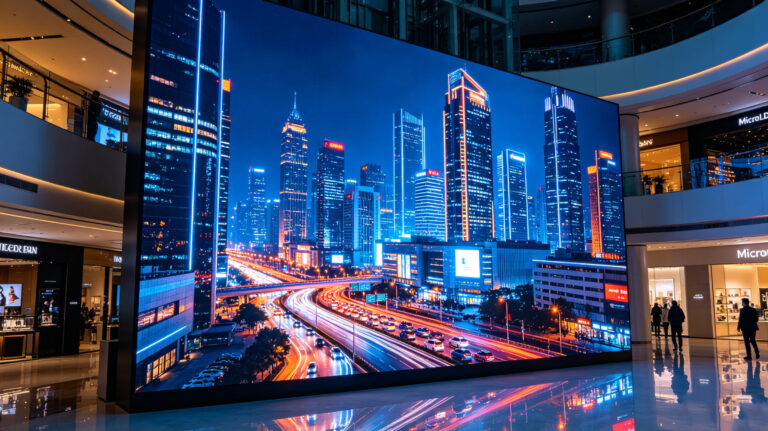
From corporate meeting rooms and retail digital signage to large outdoor LED billboards and command centers, LED displays are transforming how organizations communicate, present information, and create visual experiences.
1. Global LED Display Market Growth and Regional Demand
The development of the global LED display market is supported by increasing digitalization, infrastructure investment, and demand for more engaging visual communication solutions. Different regions are adopting LED display technology according to their economic priorities, commercial environments, and infrastructure development plans.
North America: Growing Demand for Commercial LED Displays
North America remains an important market for advanced LED display applications. Businesses, educational institutions, and public organizations are increasingly investing in digital signage, conference room displays, and immersive visual environments.
Commercial LED displays are widely used in corporate offices, shopping centers, entertainment venues, sports facilities, and transportation hubs. Their high brightness, flexible screen configurations, and ability to deliver dynamic content make them suitable for both indoor and outdoor communication.
The growing demand for fine pitch LED displays also reflects the need for high-resolution visual solutions in meeting rooms, broadcast studios, control centers, and premium commercial spaces.
Europe: Sustainability and Energy-Efficient Display Solutions
In Europe, sustainability and energy efficiency remain important considerations in the adoption of LED display technology.
Businesses and public institutions are increasingly evaluating display solutions based on power consumption, operational lifespan, maintenance requirements, and overall lifecycle costs.
LED displays support a wide range of applications, including retail advertising, public information systems, transportation signage, exhibition spaces, and corporate environments.
As organizations continue to modernize their digital infrastructure, demand for reliable and energy-efficient LED display solutions is expected to remain an important market driver.
Middle East: Infrastructure Development and Large-Scale Visual Projects
The Middle East has become an important growth region for LED display applications.
Large-scale infrastructure developments, smart city initiatives, tourism investments, and international events are creating demand for advanced visual communication systems.
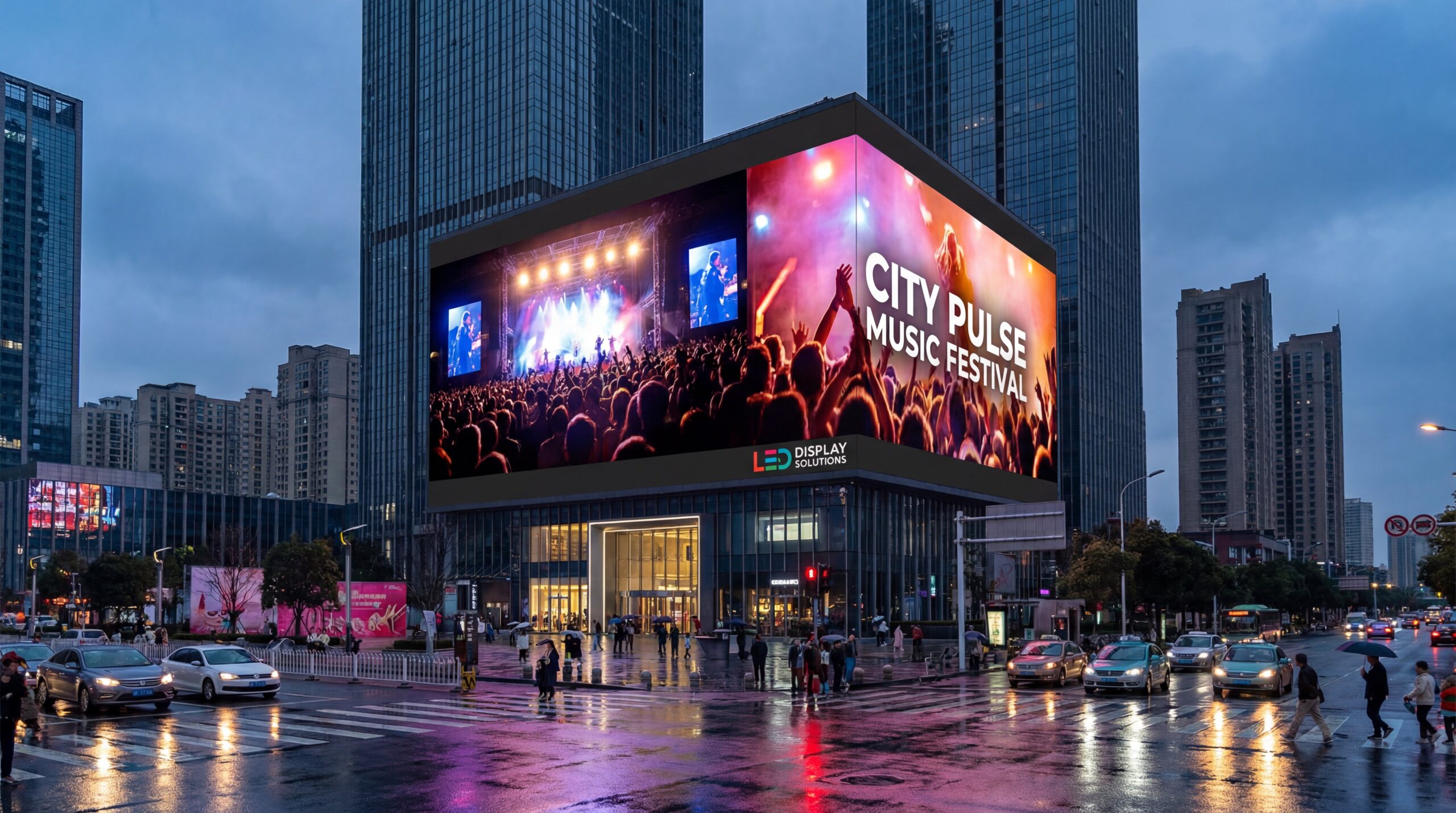
Outdoor LED billboards are increasingly used in commercial districts and entertainment destinations. Meanwhile, control room LED video walls support monitoring and decision-making in transportation, energy, security, and public infrastructure operations.
Architectural LED displays and large-format media screens are also gaining attention as developers seek to create distinctive visual experiences in shopping malls, hotels, stadiums, and urban landmarks.
Southeast Asia: Expanding Digital Infrastructure
Southeast Asia is experiencing growing demand for LED display solutions as governments and businesses invest in digital infrastructure upgrades.
Educational institutions are adopting LED screens for classrooms, lecture halls, and large-scale presentation environments. Transportation networks are implementing digital information displays to improve passenger communication.
Retail centers, commercial buildings, entertainment venues, and public service organizations are also increasing their use of digital signage and LED video walls.
As regional infrastructure develops, demand for customizable, cost-effective, and reliable LED display systems is expected to create further opportunities for manufacturers and solution providers.
2. Technological Innovation Driving the LED Display Industry
Technological advancement is one of the major forces shaping the future of the LED display industry.
Manufacturers are continuously improving pixel density, image quality, packaging technology, energy efficiency, and installation flexibility to meet increasingly demanding application requirements.
Several emerging technologies are expanding the capabilities of modern LED display solutions.
Fine Pitch LED Displays
Fine Pitch LED technology enables high-resolution images through smaller pixel spacing.
These displays are particularly suitable for close-viewing environments where image clarity and detailed visual presentation are essential.
Common applications include:
- Corporate meeting rooms.
- Broadcast studios.
- Command and control centers.
- Exhibition halls.
- Premium retail environments.
As pixel pitch continues to decrease, fine pitch LED displays are becoming increasingly competitive in professional indoor display applications.
Mini LED and Micro LED Technology
The Mini LED and Micro LED technologies represent important developments in display performance and manufacturing.
Mini LED technology uses smaller LED chips to provide more precise light control in backlighting and selected direct-view display applications.
Micro LED technology uses microscopic self-emissive LED elements to produce images with high brightness, contrast, and potential long-term durability.
Although manufacturing complexity and production costs remain important considerations, these technologies are creating new opportunities for high-performance display products.
COB LED Packaging Technology
Chip-on-Board (COB) is another important development in LED display manufacturing.
COB packaging mounts multiple LED chips directly onto a substrate and encapsulates them within a protective layer.
Compared with conventional SMD packaging, COB technology can offer several potential advantages:
- Improved surface protection.
- Better resistance to dust and physical contact.
- More compact pixel configurations.
- Enhanced suitability for fine pitch applications.
- Simplified surface cleaning in certain environments.
These characteristics make COB LED displays attractive for applications requiring high pixel density and reliable operation.
Naked-Eye 3D LED Displays
Naked-eye 3D LED displays are transforming outdoor advertising and commercial visual experiences.
By combining specially designed content with suitable screen geometry and viewing angles, these displays create three-dimensional visual effects without requiring viewers to wear special glasses.
They are increasingly used in shopping districts, commercial landmarks, entertainment venues, and large outdoor advertising installations.
As content production and display technologies improve, naked-eye 3D LED screens are creating new opportunities for brands to attract attention and improve audience engagement.
3. AI and IoT Integration: The Evolution of Smart LED Display Solutions
The development of LED display technology is no longer limited to improvements in hardware performance.
Artificial Intelligence (AI), the Internet of Things (IoT), and cloud-based management platforms are changing how modern display systems are controlled, monitored, and maintained.
These technologies are helping LED displays evolve into intelligent visual communication systems.
Intelligent Content Management
Cloud-based platforms allow operators to manage multiple LED displays from centralized systems.
Businesses can schedule advertising content, update promotional messages, and distribute information across different locations.
AI-assisted content management can also support more flexible scheduling and content optimization based on predefined operational requirements.
Remote Monitoring and Diagnostics
IoT connectivity allows LED display systems to transmit operational data to centralized management platforms.
Operators can monitor important parameters such as temperature, power status, signal conditions, and system performance.
Remote diagnostics can help maintenance teams identify potential faults and reduce the need for unnecessary on-site inspections.
Predictive Maintenance
By analyzing historical operating data and equipment performance, intelligent monitoring systems can help identify potential maintenance risks.
This supports more proactive maintenance planning and may reduce unexpected downtime.
For large-scale LED video walls, outdoor advertising networks, and command centers, improved maintenance management can contribute to greater operational efficiency.
Real-Time Performance Monitoring
Smart LED display solutions can integrate monitoring functions to provide visibility into equipment status and operating conditions.
For operators managing multiple screens across commercial buildings, transportation networks, or public infrastructure, centralized monitoring can simplify system management and improve maintenance coordination.
The combination of LED hardware, AI, IoT, and cloud-based platforms is creating new opportunities for intelligent digital signage and connected display ecosystems.
4. Expanding Applications of LED Display Technology
As display performance improves and system integration becomes more flexible, LED display technology is entering an increasingly diverse range of applications.
Its combination of brightness, scalability, and dynamic content capabilities makes it suitable for different communication environments.
Key application sectors include:
Commercial and Retail Displays
Retailers use LED video walls, digital signage, and transparent LED screens to present advertisements, product information, and promotional content. These solutions help create engaging shopping environments and strengthen brand visibility.
Education and Corporate Environments
Schools, universities, and businesses use LED displays in classrooms, lecture halls, conference rooms, and auditoriums. Large-format screens support presentations, collaboration, and visual communication.
Transportation and Public Infrastructure
Airports, railway stations, metro systems, and bus terminals use LED information displays to deliver schedules, announcements, navigation guidance, and public service information.
Entertainment and Sports Venues
Stadiums, concert venues, theaters, and event spaces rely on large LED screens for live broadcasting, advertising, stage backgrounds, and audience engagement.
Command and Control Centers
Government agencies, utilities, transportation operators, and security organizations use LED video walls to visualize operational information and monitor complex systems.
Architectural and Creative Installations
Flexible LED displays, curved LED screens, and customized display structures allow designers to integrate digital content into buildings, commercial spaces, and exhibition environments.
These applications demonstrate how LED display solutions are becoming an essential part of modern communication and digital infrastructure.
5. What Makes an LED Display Manufacturer Competitive in the Global Market?
As international demand increases, competition among LED display manufacturers is becoming more focused on product performance, engineering capabilities, production quality, and customer support.
For distributors, system integrators, contractors, and project buyers, choosing a reliable manufacturer is an important part of project success.
Several factors deserve attention when evaluating potential suppliers.
Research and Development Capabilities
Strong R&D capabilities allow manufacturers to improve display performance, develop new product structures, and respond to changing application requirements.
This is particularly important for projects involving fine pitch LED, COB packaging, flexible LED displays, and customized display configurations.
Advanced Production Systems
Modern production equipment and standardized manufacturing processes help improve product consistency and production efficiency.
Automated assembly, precise calibration, and systematic quality inspections can contribute to more reliable display performance.
Strict Quality Control
LED displays often operate for extended periods in commercial and public environments.
Manufacturers should implement quality control procedures covering LED components, power supplies, driving systems, module assembly, brightness consistency, and finished product testing.
For outdoor LED displays, environmental protection and structural reliability are also important considerations.
Customization and Engineering Support
Different projects have different requirements for display dimensions, pixel pitch, brightness, installation structures, and control systems.
Manufacturers with strong engineering capabilities can provide customized LED display solutions for specific installation environments.
International Service and Technical Support
For overseas buyers, after-sales support is an important part of supplier evaluation.
Technical documentation, installation guidance, spare parts availability, remote troubleshooting, and warranty support can help reduce operational risks throughout a display system’s service life.
These capabilities allow manufacturers to build stronger relationships with international distributors, contractors, and project partners.
6. The Future of the Global LED Display Industry
The LED display industry is expected to continue evolving as digital communication becomes more integrated into everyday environments.
Several long-term trends are likely to influence future market development.
First, demand for high-resolution displays will continue to support innovation in fine pitch LED, Mini LED, Micro LED, and advanced packaging technologies.
Second, smart display management will become increasingly important as businesses operate larger networks of digital signage and connected display systems.
Third, customized display structures will create more opportunities in architectural media, immersive entertainment, retail environments, and creative commercial installations.
Finally, energy efficiency, product reliability, lifecycle costs, and intelligent maintenance will remain important considerations for businesses investing in digital display infrastructure.
As these trends develop, LED display manufacturers will need to combine technological innovation with reliable manufacturing, application expertise, and international service capabilities.
Conclusion: Innovation Is Shaping the Future of Visual Communication
The global LED display market is being shaped by digital transformation, expanding infrastructure investment, and continuous technological innovation.
From commercial digital signage and corporate meeting rooms to smart city infrastructure and large-scale outdoor advertising, LED display technology is becoming an increasingly important part of modern visual communication.
Advancements in Fine Pitch LED, Mini LED, Micro LED, COB packaging, and naked-eye 3D displays are expanding the possibilities of display performance and application design.
Meanwhile, AI, IoT, and cloud-based management systems are helping create smarter, more connected, and more efficient display ecosystems.
As global demand continues to evolve, manufacturers with strong R&D capabilities, advanced production systems, strict quality management, and comprehensive technical support will be better positioned to serve international markets.
SPAISEN believes that innovation-driven development and intelligent LED display technologies will continue to create new opportunities for businesses, institutions, and communities worldwide, contributing to a smarter and more connected future.