


Micro LED Technology Drives the Next Wave of Innovation in the LED Display Industry
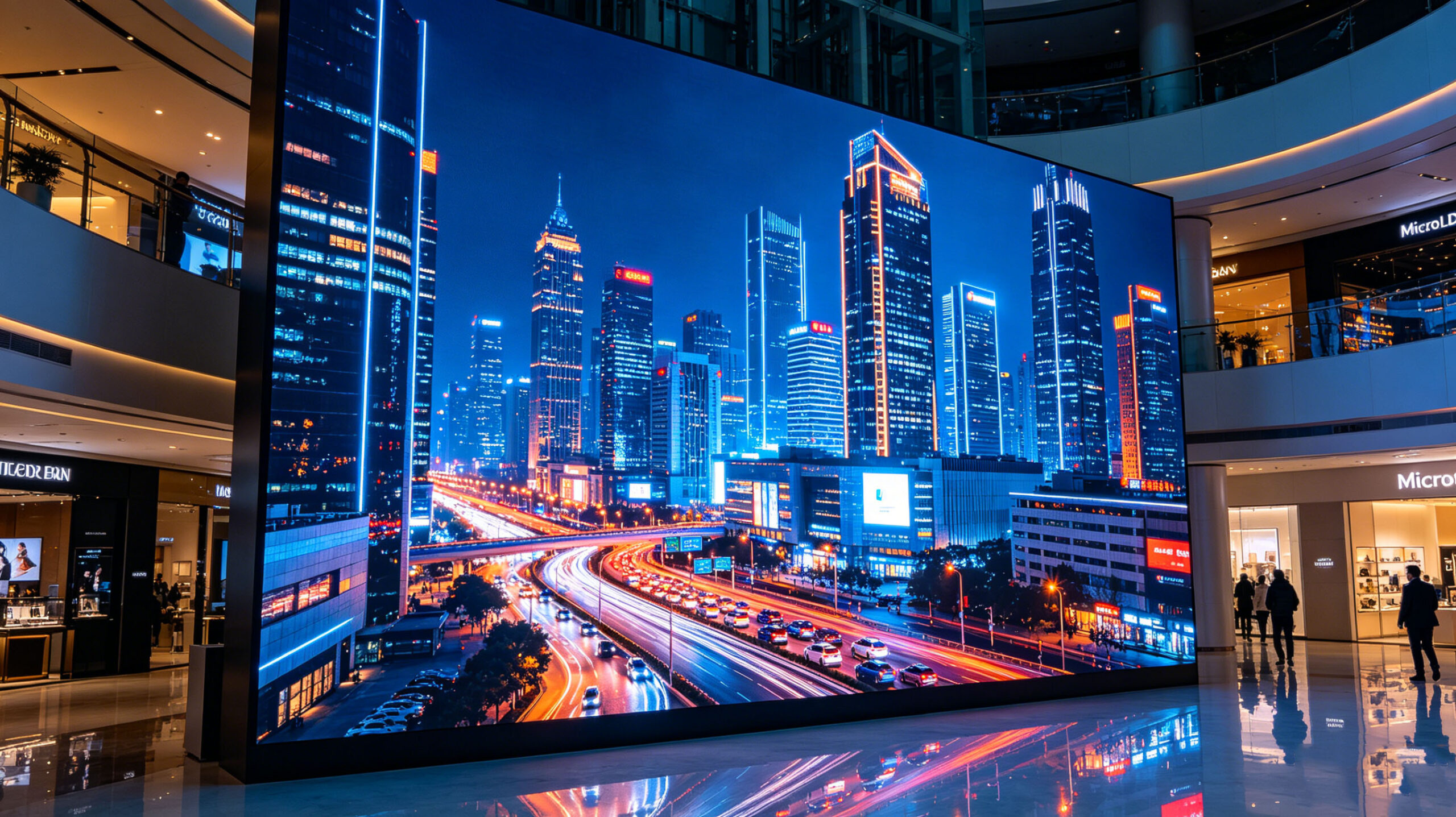
As the global display industry continues to advance, Micro LED technology is emerging as one of the most promising innovations in next-generation display solutions. With its exceptional brightness, high contrast, precise color reproduction, and energy efficiency, Micro LED is attracting growing attention from display manufacturers, technology companies, and commercial display solution providers.
Compared with conventional LED display technologies, Micro LED offers significant advantages in visual performance, response speed, and long-term reliability. These characteristics make it a strong candidate for applications requiring ultra-high resolution, seamless large-format displays, and immersive viewing experiences.
In recent years, breakthroughs in Micro LED chip manufacturing, mass transfer technology, and automated production have accelerated its commercial development. As manufacturing processes improve and production costs gradually decline, Micro LED is moving beyond laboratory research toward broader commercial applications.
Today, Micro LED displays are being explored across commercial advertising, command and control centers, digital cinemas, broadcasting studios, transportation hubs, luxury retail environments, and premium consumer electronics. At the same time, the integration of Artificial Intelligence (AI), the Internet of Things (IoT), and intelligent display management systems is creating new opportunities for advanced visual communication.
This article explores how Micro LED technology works, its major performance advantages, key manufacturing developments, and the applications shaping the future of the LED display industry.
1. What Makes Micro LED Technology Different?
Micro LED is an advanced display technology that uses microscopic light-emitting diodes as individual pixels. Unlike LCD displays, which rely on a backlight, Micro LED displays use self-emissive pixels that generate their own light.
This architecture enables precise control over brightness, contrast, and color output. Each pixel can be independently controlled, creating highly detailed images with deep blacks and vivid colors.
Compared with conventional LED display solutions, Micro LED technology offers several important performance advantages:
- High Brightness: Micro LED displays can deliver exceptional brightness, making them suitable for environments with strong ambient lighting.
- High Contrast: Self-emissive pixels provide precise light control and deep black levels.
- Wide Color Gamut: Advanced LED materials support rich colors and accurate image reproduction.
- Fast Response Time: Direct light emission enables rapid pixel response, supporting smooth dynamic content.
- Energy Efficiency: Micro LED can offer improved power efficiency under suitable operating conditions and display configurations.
- Long Operational Life: Inorganic LED materials provide strong potential for long-term reliability and stable performance.
These advantages make Micro LED an attractive technology for applications where image quality, brightness, and operational performance are essential.
2. Key Advantages of Micro LED Displays
The growing interest in Micro LED technology comes from its ability to combine several important display performance characteristics within a single system.
2.1 Exceptional Image Quality
Image quality is one of the most important advantages of Micro LED displays.
Because each microscopic LED functions as an individual light source, the display can control pixels with high precision. This helps deliver high contrast, accurate colors, and detailed visual content.
Micro LED technology is particularly promising for ultra-high-definition display applications, including 4K and 8K screens, premium home entertainment systems, and professional visual environments.
For large-format displays, its self-emissive architecture also supports seamless screen configurations without the conventional backlight structure used in LCD panels.
2.2 High Brightness and Contrast Performance
Micro LED displays are capable of delivering high brightness while maintaining strong contrast performance.
This makes them suitable for environments where conventional displays may struggle with ambient light, such as shopping malls, transportation hubs, exhibition halls, and outdoor-facing commercial spaces.
The ability to control individual pixels also helps produce darker black areas and brighter highlights within the same image.
2.3 Improved Energy Efficiency
Energy efficiency is another important factor driving interest in Micro LED technology.
Unlike LCD displays that require a separate backlight, Micro LED pixels generate their own light. This architecture can reduce unnecessary light output and improve display efficiency under certain brightness levels and content conditions.
Actual power consumption depends on pixel density, brightness settings, image content, display size, and system design.
As chip efficiency and driving technologies continue to improve, Micro LED displays are expected to offer additional opportunities for energy optimization.
2.4 Fast Response and Smooth Visual Performance
Micro LED technology supports rapid pixel response, making it suitable for applications involving fast-moving images and dynamic visual content.
This characteristic is valuable in broadcasting, professional monitoring, virtual production, gaming, and immersive entertainment environments.
Combined with appropriate driving electronics and refresh-rate control, Micro LED displays can support smooth image transitions and responsive visual performance.
2.5 Long-Term Reliability
Micro LED uses inorganic semiconductor light-emitting materials, which offer strong potential for long operational life and stable display performance.
Compared with technologies that rely on organic emissive materials, Micro LED can provide advantages in certain aging and environmental stability characteristics.
However, actual product reliability depends on chip quality, packaging, thermal management, driving systems, and manufacturing consistency.
3. Micro LED Manufacturing: Technologies Driving Commercialization
Although Micro LED offers significant technical advantages, large-scale manufacturing remains one of the industry’s biggest challenges.
Producing millions of microscopic LED chips and integrating them accurately into display backplanes requires highly precise manufacturing processes.
Several technologies are playing important roles in accelerating commercialization.
3.1 Micro LED Chip Manufacturing
Micro LED displays rely on extremely small LED chips, often measuring less than 100 micrometers.
Manufacturing these chips requires precise semiconductor processing, material control, wafer fabrication, and chip separation technologies.
Red, green, and blue Micro LED chips must also deliver consistent brightness and color performance.
Improving chip efficiency, reducing defects, and achieving uniform optical characteristics are essential for producing high-quality displays at commercial scale.
3.2 Mass Transfer Technology
Mass transfer is one of the most critical processes in Micro LED manufacturing.
It involves transferring large quantities of microscopic LED chips from their original wafers or temporary carriers onto display backplanes.
The process must achieve high placement accuracy, transfer speed, and manufacturing yield.
For large-resolution displays, even a small defect rate can result in a significant number of faulty pixels.
As a result, manufacturers are investing in advanced transfer methods, precision alignment systems, and automated inspection technologies.
3.3 Automated Inspection and Repair
Micro LED manufacturing requires comprehensive quality control throughout the production process.
Automated inspection systems help identify defective chips, alignment errors, and brightness inconsistencies.
Repair technologies are equally important because they allow manufacturers to replace or correct defective pixels without discarding entire display panels.
Improvements in inspection accuracy and repair efficiency can reduce production losses and improve overall manufacturing yield.
3.4 Production Automation and Cost Reduction
Automation is helping manufacturers improve consistency and increase production efficiency.
From chip handling and mass transfer to bonding, inspection, and final testing, automated manufacturing systems can reduce manual operations and improve process control.
As production equipment becomes more advanced, manufacturing yields improve, and supply chains mature, Micro LED production costs are expected to become more competitive.
These developments will play a major role in determining how quickly Micro LED technology can expand into mainstream commercial display markets.
4. Major Applications of Micro LED Technology
The unique characteristics of Micro LED technology make it suitable for a wide range of professional and commercial display applications.
Its combination of high brightness, strong contrast, seamless integration, and long-term reliability creates opportunities across several industries.
4.1 Commercial Displays and Digital Advertising
Commercial advertising is an important application area for advanced LED display technology.
Shopping malls, retail stores, airports, hotels, and commercial complexes increasingly require high-quality digital displays to deliver promotional content and brand experiences.
Micro LED displays can provide vivid colors, high brightness, and detailed images for premium advertising installations.
Their modular architecture also supports large-format display configurations for commercial environments.
4.2 Command and Control Centers
Command and control centers require reliable visual systems for monitoring, data presentation, and real-time decision-making.
Applications include:
- Public security monitoring.
- Transportation management.
- Energy infrastructure monitoring.
- Emergency response centers.
- Industrial control rooms.
Micro LED displays offer high contrast, detailed image reproduction, and the potential for seamless large-screen configurations.
These characteristics make them attractive for professional environments where information clarity and display reliability are essential.
4.3 Digital Cinemas and Broadcasting Studios
Digital cinemas and broadcasting studios require advanced display solutions capable of reproducing detailed images and accurate colors.
Micro LED technology offers high brightness, strong contrast, and fast response performance.
These features create opportunities for premium cinema displays, professional monitoring systems, and next-generation broadcasting environments.
As display resolution requirements continue to increase, Micro LED may become an important option for specialized visual production applications.
4.4 Virtual Production and Immersive Entertainment
Virtual production is creating new opportunities for advanced LED display technologies.
In film production, television studios, and immersive entertainment venues, large LED walls are used to display digital backgrounds and virtual environments.
Micro LED technology has the potential to enhance these applications through high brightness, precise color reproduction, and detailed image performance.
It can also support immersive installations in theme parks, exhibition centers, and interactive entertainment spaces.
4.5 Transportation Hubs and Smart Cities
Transportation hubs and smart city projects require digital display systems that can deliver clear information in demanding environments.
Potential applications include:
- Airport information displays.
- Railway station visual systems.
- Public transportation guidance.
- Smart city information centers.
- Large-scale public advertising displays.
High brightness and strong image visibility make Micro LED technology an interesting option for these applications.
However, product selection must also consider environmental protection, operating temperature, maintenance requirements, and installation conditions.
4.6 Luxury Retail and Premium Consumer Electronics
Micro LED is also attracting attention in high-end retail environments and premium consumer electronics.
Luxury retail brands use advanced displays to create visually distinctive shopping experiences and showcase products with detailed imagery.
In consumer electronics, Micro LED is being developed for premium televisions, wearable displays, and other next-generation visual devices.
Its high pixel density potential, brightness performance, and self-emissive architecture make it particularly attractive for advanced display products.
5. Micro LED vs. Traditional LED and Other Display Technologies
Micro LED is part of a broader display technology landscape that includes conventional LED, LCD, OLED, and Mini LED.
Each technology has different advantages depending on screen size, viewing distance, production cost, and application requirements.
| Comparison Factor | Micro LED | Conventional LED Display | OLED | LCD |
|---|---|---|---|---|
| Light Emission | Self-emissive pixels | Self-emissive LED pixels | Self-emissive organic pixels | Requires backlighting |
| Brightness Potential | Very high | High | Generally lower than high-brightness LED systems | Depends on backlight design |
| Contrast | Excellent | High, depending on pixel pitch and configuration | Excellent | Depends on local dimming capability |
| Color Performance | Wide color gamut potential | Strong color performance | Excellent color reproduction | Varies by panel technology |
| Response Time | Very fast | Very fast | Very fast | Generally slower |
| Lifespan | Strong potential for long-term operation | Depends on LED components and system design | Subject to organic material aging | Depends on backlight and panel components |
| Manufacturing Complexity | Very high | Relatively mature | High | Mature and highly scalable |
| Current Cost | Generally high | Varies by pixel pitch and application | Varies by size and product class | Generally more economical |
Micro LED offers significant performance potential, but conventional LED and LCD technologies remain more commercially mature in many market segments.
For large commercial installations, conventional LED displays continue to provide competitive pricing and flexible modular configurations.
Micro LED is particularly attractive for premium applications where advanced image performance and future scalability justify higher manufacturing costs.
6. The Role of AI and IoT in Future Micro LED Display Solutions
The future development of Micro LED displays will involve more than improvements in semiconductor manufacturing.
The integration of Artificial Intelligence (AI), the Internet of Things (IoT), and intelligent display management systems is expected to create more advanced and connected visual solutions.
6.1 AI-Powered Display Optimization
AI technologies can help optimize display performance based on environmental conditions and content requirements.
Potential applications include:
- Automatic brightness adjustment.
- Intelligent color calibration.
- Image enhancement and upscaling.
- Display performance monitoring.
- Predictive maintenance analysis.
These capabilities can help improve visual consistency and simplify display management.
6.2 IoT-Based Monitoring and Maintenance
IoT connectivity enables display systems to exchange operational information with centralized management platforms.
For large commercial installations, connected monitoring systems can help track operating temperatures, power consumption, component status, and potential faults.
This makes it easier for operators to manage multiple display installations and identify maintenance requirements.
6.3 Cloud-Based Content Management
Cloud-based content management systems allow businesses to control display content remotely.
For digital advertising networks, retail chains, transportation systems, and commercial complexes, this can simplify content distribution across multiple locations.
When combined with intelligent display monitoring, cloud-based management can improve operational efficiency and support more flexible visual communication strategies.
7. Challenges and Future Development of Micro LED Technology
Despite its significant potential, Micro LED technology still faces several challenges before achieving widespread adoption.
7.1 High Manufacturing Costs
The production of Micro LED displays requires specialized semiconductor equipment, precision transfer systems, advanced bonding processes, and sophisticated inspection technologies.
These requirements contribute to high manufacturing costs, particularly for products with very high pixel densities.
Reducing production expenses is essential for expanding Micro LED applications beyond premium markets.
7.2 Mass Transfer Yield and Manufacturing Scalability
Mass transfer remains one of the most important technical barriers.
A large display may contain millions of microscopic LED chips. Maintaining consistent placement accuracy and minimizing defects across such a large number of components is extremely challenging.
Manufacturers must continue improving transfer efficiency, defect detection, repair methods, and production automation.
7.3 Full-Color Integration
Producing consistent red, green, and blue Micro LED pixels is another major challenge.
Different chip materials and manufacturing processes can create variations in efficiency, color output, and production yield.
Advanced color integration technologies and improved chip manufacturing processes will be important for achieving consistent full-color display performance.
7.4 Market Adoption and Supply Chain Development
Commercial adoption depends not only on display performance but also on production capacity, component availability, system integration, and after-sales support.
As more manufacturers invest in Micro LED research and development, the supply chain is expected to become increasingly specialized.
Continued improvements in manufacturing equipment, materials, and automated inspection will help determine the technology’s long-term commercial competitiveness.
8. What Is the Future Outlook for Micro LED Displays?
The future of Micro LED technology is closely connected to the increasing demand for high-resolution, high-performance, and immersive visual experiences.
As 4K and 8K display applications continue to expand, manufacturers are exploring new ways to improve pixel density, brightness uniformity, color performance, and overall display efficiency.
Micro LED is well-positioned to contribute to this development, particularly in premium commercial displays, professional visualization systems, and advanced consumer electronics.
At the same time, improvements in mass transfer, chip production, automated inspection, and repair technologies will be essential for reducing manufacturing costs and increasing production scalability.
The integration of AI, IoT, and cloud-based management will further expand the capabilities of next-generation display solutions.
Although conventional LED, LCD, and OLED technologies will continue to serve important market segments, Micro LED is expected to become an increasingly important part of the advanced display ecosystem.
For display manufacturers, system integrators, and commercial project developers, understanding Micro LED’s technical advantages and manufacturing challenges will be essential when evaluating future display investments.
Conclusion
Micro LED technology represents an important development in the evolution of the global LED display industry.
Its high brightness, excellent contrast, wide color gamut, fast response, and long-term reliability create new possibilities for premium visual applications.
From commercial advertising and command centers to virtual production, transportation hubs, and next-generation consumer electronics, Micro LED displays are opening new opportunities for advanced visual communication.
Although manufacturing costs, mass transfer efficiency, and production scalability remain significant challenges, continuous innovation is helping move the technology toward broader commercialization.
As semiconductor manufacturing advances and the display supply chain becomes more mature, Micro LED is expected to play an increasingly important role in shaping the next generation of display technology.
